
Introduction
Choosing between Google Ads vs Facebook Ads is one of the most consequential paid marketing decisions a Los Angeles business makes. Getting it wrong delays customer acquisition Los Angeles while competitors wait for the budget. Los Angeles is one of the most competitive PPC markets in the United States, where advertiser density drives costs higher than national averages in all major services. Market density, audience diversity, and local search behavior all influence which channel’s mechanics align with how LA customers actually buy.
Google and Facebook are both dominant, well-resourced, and capable of delivering strong returns in the right context. The real question is which one matches the stage of the customer journey your business needs to influence, the search behavior of your specific LA audience, and the acquisition economics your margins can support. This guide answers that question deeply, covering how each platform works, what each is actually built to do, and how to make the decision based on your business model rather than industry opinion. It will also help you choose the right Google Ads agency Los Angeles.
What Is the Real Difference Between Google Ads and Facebook Ads?
Capture vs. Creation
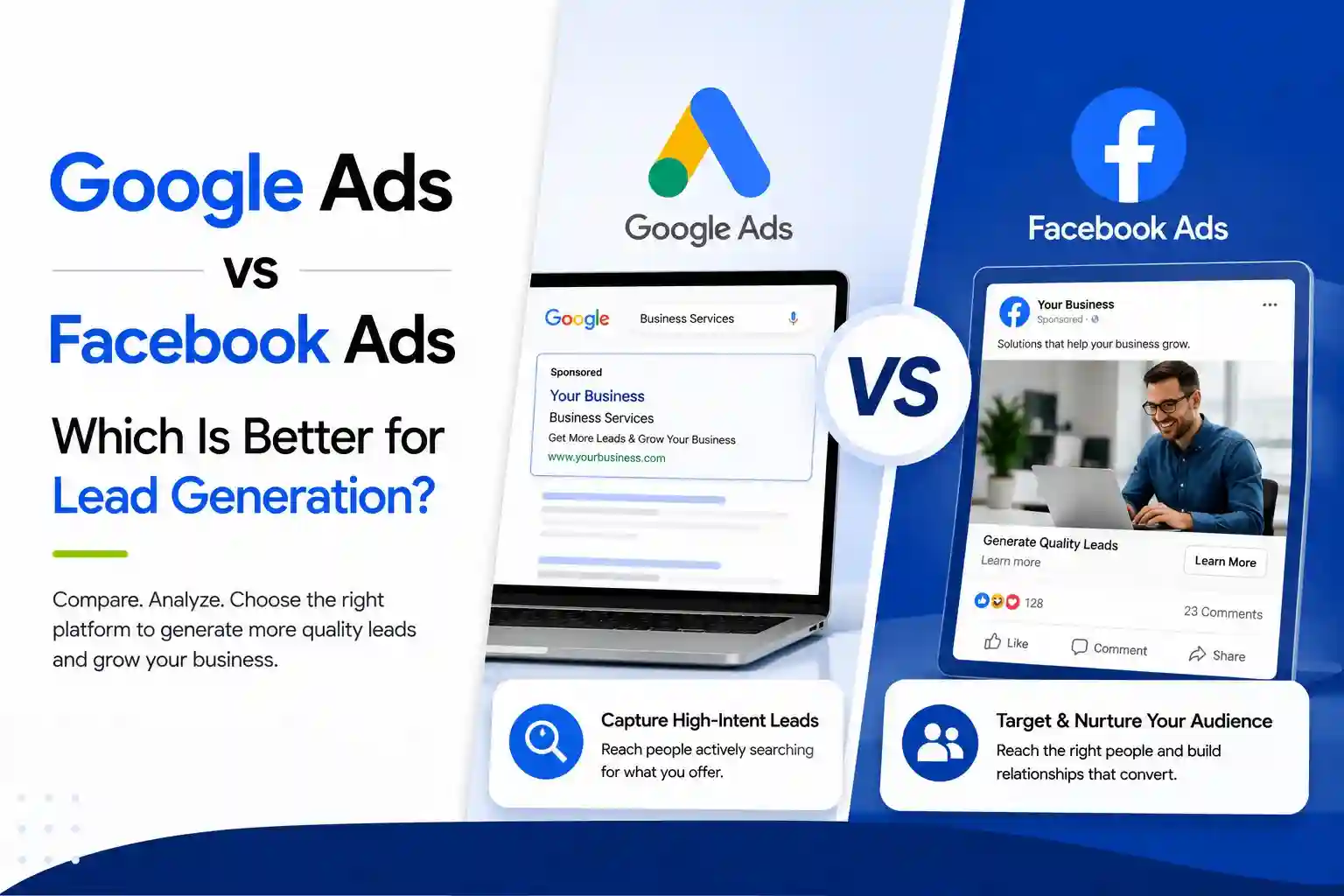
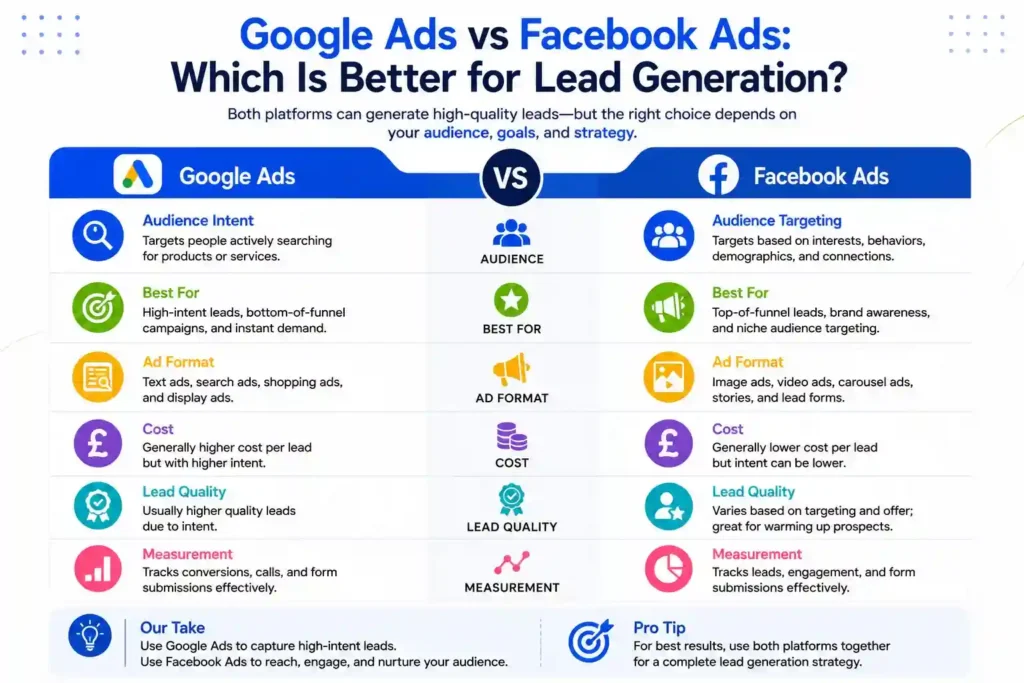
Google Ads and Facebook Ads solve different problems in the customer journey. Google is a demand-capture platform, which means it intercepts buyers already searching for a solution. Facebook is a demand-creation platform. It places your offer in front of people who match your customer profile before they form search intent. These are sequential functions, not competing ones.
How Google Intent Works
When someone searches “emergency plumber Glendale” or “DUI attorney consultation,” they have already decided to hire. Their search is the only act of selecting who. Google’s auction system enters your ad into that moment based on bid, keyword relevance, and Quality Score. The search query pre-qualifies the buyer before they ever click.
How Facebook Discovery Works
Facebook reaches users based on who they are, not what they are searching for. The platform uses demographic signals, behavioral data, and Meta’s AI. For businesses whose customers need to be nurtured through a consideration cycle before they search, Facebook performs the awareness and desire-building work.
Which Platform Delivers Better Lead Quality for Los Angeles Businesses?
Lead Volume Is Misleading
Comparing platforms on raw cost per lead produces a number that looks like insight but is not. A lead’s value is determined entirely by its probability of becoming a paying customer. The CPL advantage Facebook frequently shows over Google in service categories narrows, and often reverses, when close rates enter the calculation.
Why Google Leads Close Faster
Google leads carry a structural quality premium because the search query is a self-declaration of need. A person searching for a specific service term with a location modifier has identified a problem and is actively comparing businesses to contact. That pre-qualification reduces the selling work required to convert the lead.
Where Facebook Lead Quality Works
Facebook leads perform well for consumer-facing offers where the purchase decision is lower-friction and the offer is visual. Wellness and beauty, consumer products, and event-based categories convert at acceptable rates through Facebook. Facebook also excels at retargeting, producing significantly higher conversion rates than cold-audience traffic.
The Metric That Settles This
Cost per acquired customer means total ad spend divided by leads who became paying customers. It accurately compares lead quality across platforms. Calculating this using CRM data rather than platform-reported conversions removes attribution bias from both sides. The platform with the lower cost per acquired customer always delivers better quality.
Google Ads vs Facebook Ads: How Targeting Works in an LA Market
Why LA Needs High Accuracy
Los Angeles is not one market. It is a layered geography of neighborhoods with distinct income profiles, languages, and consumer behaviors. Both platforms offer neighborhood-level accuracy, and using them directly determines whether campaigns generate profitable returns or traffic without revenue.
Google Targeting in LA
Google combines keyword intent with geographic filters, device signals, time-of-day scheduling, and in-market audience overlays. For LA businesses, structuring campaigns around neighborhood-level targeting improves Quality Scores and reduces spend on geographically irrelevant searches.
Facebook Targeting in LA
Facebook’s strength in LA is audience modelling with specificity that no keyword system can match. Custom Audiences built from your customer database allow Meta to find LA users who most closely resemble your best customers through Lookalike modeling. Meta’s Advantage+ system uses AI to expand toward the highest-converting segments automatically.
Which Platform Offers Better ROI for PPC advertising Los Angeles?
Google ROI for Service Businesses
For LA businesses where search demand is strong and customer lifetime value is high, Google Ads consistently delivers stronger acquisition ROI than Facebook. The higher CPCs competitive LA categories carry are absorbed by the higher close rates that intent-qualified leads generate.
Facebook ROI for Consumer Brands
For LA businesses where the offer is visual, and the category depends on awareness before search intent forms, Facebook and Instagram deliver better ROI in the awareness role. Facebook’s ROI also extends to a secondary channel, which is branded search volume generated downstream by awareness campaigns, then captured by Google.
Why Running Both Wins
The highest-sustained-ROI strategy for established LA businesses is a coordinated two-platform system. Google captures existing demand, Facebook creates future demand, and re-engages unconverted visitors. When each platform is measured against the KPI appropriate to its funnel role, the combined system consistently outperforms.
Google Ads or Facebook Ads Which Is Right for Local Lead Generation in Los Angeles?
Verify Search Demand First
The prerequisite for any LA local lead generation strategy is confirming whether meaningful monthly search volume exists for your core service terms. Verify this in Google Keyword Planner with Los Angeles geographic filters before allocating budget to Search campaigns. Categories with strong local demand make Google Search Ads and LSAs the most efficient acquisition channels. Categories with thin or absent search volume require a demand-creation approach through Facebook before search becomes viable.
When Google and LSAs Lead
For LA service businesses with established search demand, Google Search Ads and Local Services Ads should carry the primary lead generation budget because they intercept buyers at peak purchase readiness. Google LSAs appear above traditional Search Ads, operate on a pay-per-lead model, and display the Google Screened or Guaranteed badge. It is a trust signal that meaningfully reduces friction for consumers evaluating unfamiliar local providers. In competitive LA categories with high Search CPCs, LSAs frequently deliver a lower effective cost per qualified lead with higher conversion rates.
When Facebook and Instagram Lead
For LA businesses where search volume is insufficient, including new service concepts, visual products, and awareness-dependent offers, Facebook and Instagram are the appropriate primary acquisition channels. They reach the target audience regardless of search behaviour. Google Display Ads can reach cold audiences cheaply but convert too poorly to serve as a primary acquisition channel for most local service offers.
When to Run Both
For established LA businesses with both search demand and brand-building potential, a coordinated allocation across both platforms outperforms a binary choice. A practical starting allocation for most local service businesses is 60 to 70 percent toward Google Search and LSAs and 30 to 40 percent toward Facebook for retargeting, Lookalike prospecting, and awareness. This ratio adjusts as CRM data accumulates; actual cost per acquired customer per channel, not platform preference, determines the final split.
What Is the Best Paid Marketing Strategy in Los Angeles in 2026?
Define the Conversion First
Both Google’s Smart Bidding and Meta’s Advantage+ optimize toward the conversion event you define. A proxy signal like a form submission trains the algorithm to find form completers, not customers. Defining the actual commercial outcome and feeding it back via the Conversions API is the highest-leverage single action available to any LA business running paid advertising.
Use Your Own Customer Data
Google’s Customer Match and Meta’s Custom Audiences allow LA businesses to train optimization algorithms on their own customer data. Campaigns running on first-party data signals consistently achieve lower cost per lead and per customer. Uploading the existing customer database as a Lookalike seed on Facebook and as an audience signal layer in Google is a high-return technical step.
Measure Across Channels
Budget decisions made from native platform reports systematically undercount the other channel’s influence. Cross-channel measurement using Google Analytics 4 with data-driven attribution distributes credit across all touchpoints proportionally. Supplementing this with incrementality testing produces the ground-truth ROI data that accurate, defensible budget allocation decisions require.
Which Advertising Platform Is Right for My Business?
No standard benchmark or platform comparison resolves the Google vs. Facebook question for a specific LA business. The following four questions’ answers can help you make an informed decision regarding your platform choice for your LA business.
Is there active search demand for your service in LA?
Verify monthly search volume in Google Keyword Planner before committing to Search campaigns. If volume is meaningful, Google should lead the acquisition budget. If volume is thin or absent, Facebook and Instagram are the primary channels; no search campaign generates leads from searches that are not occurring.
What is your customer’s lifetime value?
High LTV absorbs LA’s competitive Search CPCs and justifies Google’s intent premium. Low average transaction value with minimal repeat purchases cannot sustain Search CPC levels in competitive LA categories without exceptional funnel conversion rates across every stage.
How long is your sales cycle?
Short, urgent decision cycles, trades, emergency services, and immediate-need categories align with Google’s intent-capture model. Long consideration cycles benefit from Facebook’s nurturing capability, building familiarity over weeks before a purchase decision forms, with Google capturing the conversion at the end.
Can you produce quality creative?
Facebook and Instagram are creative-first environments where visual assets and copy determine performance as much as targeting and budget. Without investment in quality photography, video, and audience-specific copy, Meta campaigns will underperform regardless of targeting precision. Google’s text-based Search Ads require keyword relevance and landing page quality, a lower production barrier for most businesses.
Why Most LA Businesses Need Expert Help to Get This Right
The Google Ads vs Facebook Ads decision for Los Angeles businesses is not a one-time choice but an ongoing strategy requiring continuous optimization and measurement. What separates profitable campaigns from wasted spend is the accuracy of strategy and disciplined management, which most companies cannot sustain internally. Arascow.com builds and manages paid advertising systems that function as customer acquisition Los Angeles engines rather than simple campaigns. Whether through Google Ads tailored to LA’s search behavior, Facebook and Instagram campaigns that create demand, or a coordinated full‑funnel approach, Arascow delivers the strategic depth and accountability the LA market demands. If your campaigns are spending without return, or you are making this platform decision for the first time, reach out to Arascow for a strategy consultation focused on your growth targets.
Frequently Asked Questions
Google Ads vs Facebook Ads in Los Angeles?
Both platforms are highly competitive in LA for different reasons. Campaign quality, targeting accuracy, and creative relevance are what allow moderate-budget businesses to compete effectively against larger advertisers on both platforms.
Google vs Facebook: which ads deliver better ROI in Los Angeles?
ROI depends on the business model and how it is measured. Google delivers better ROI for high-intent service categories with strong local search demand because lead quality and close rates are higher. Facebook delivers better ROI for consumer brands, visual offers, and awareness-dependent categories.
How to get more leads in Los Angeles?
Match the platform to your customer’s decision stage before adjusting spend. Across both platforms, improving mobile page speed, conversion action clarity, and lead follow-up speed produces measurable lead volume increases without proportionate budget increases.
Is PPC advertising Los Angeles worth the cost for small businesses?
Yes, especially for businesses in categories with local search demand or targetable social audiences. All you need to do is build campaigns that are correctly structured and funded at a level that generates meaningful conversion data.
Should I hire a Google Ads or Facebook Ads agency Los Angeles?
For businesses spending above $2,000 per month in combined ad budget, specialist management typically produces a lower cost per acquired customer than self-management. For smaller budgets, the decision depends on technical depth with both platforms and the opportunity cost of self-management time.